Open Mic Night in Palm Bay – Live Every Thursday
Music-forward open mic from 8:00 PM to 1:15 AM. Full live sound. All ages welcome (minors with adult). Signups at 7:15 PM.
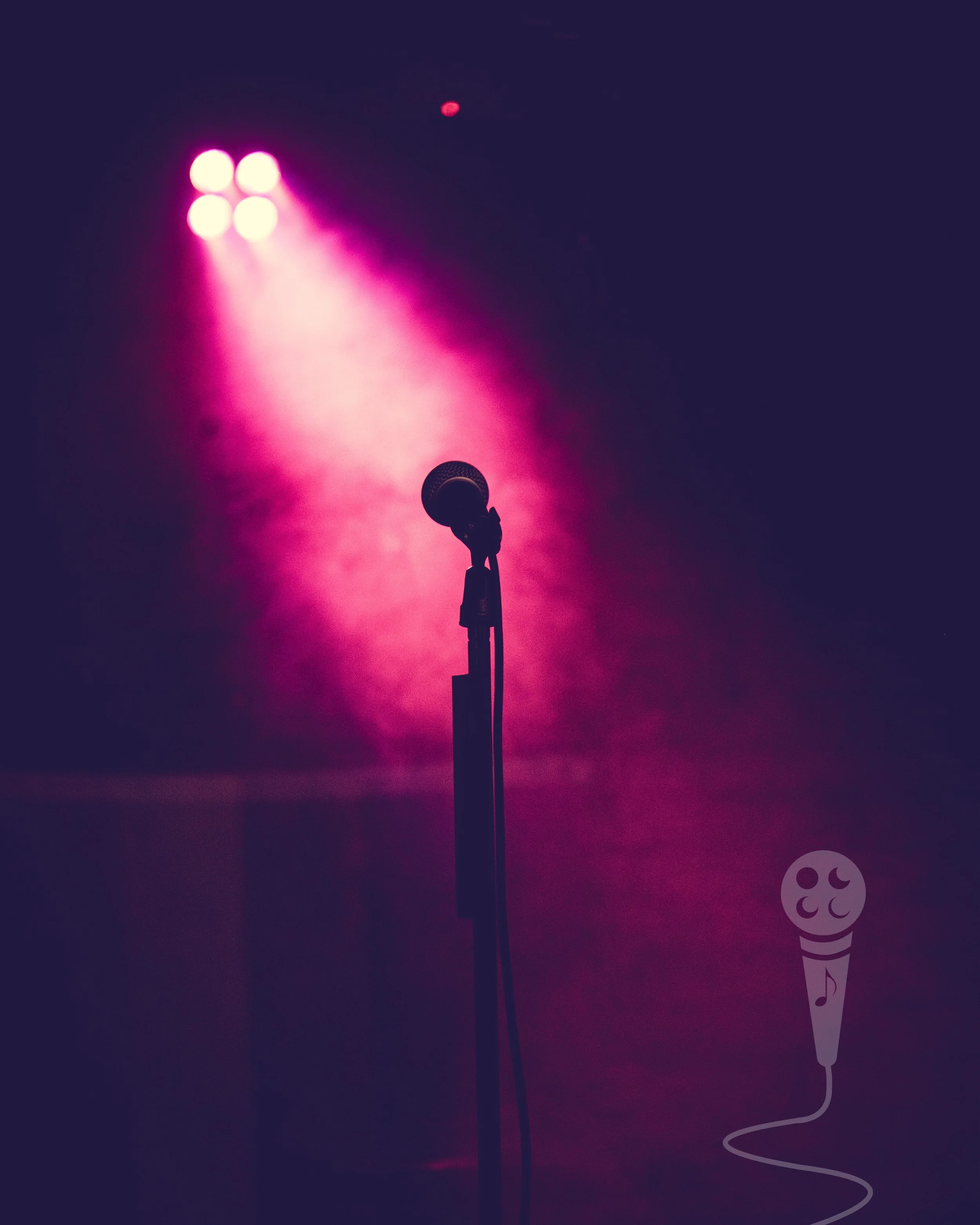
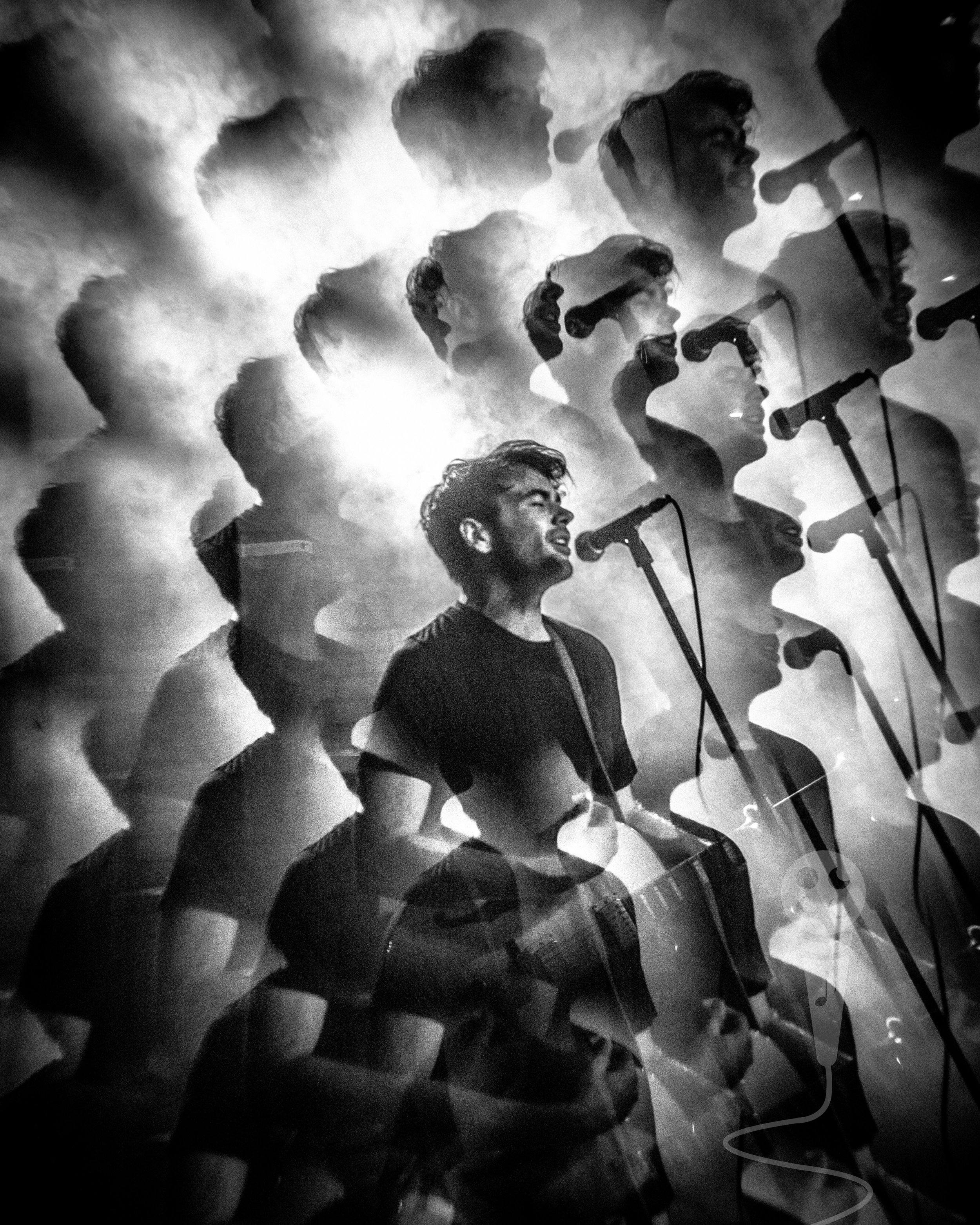
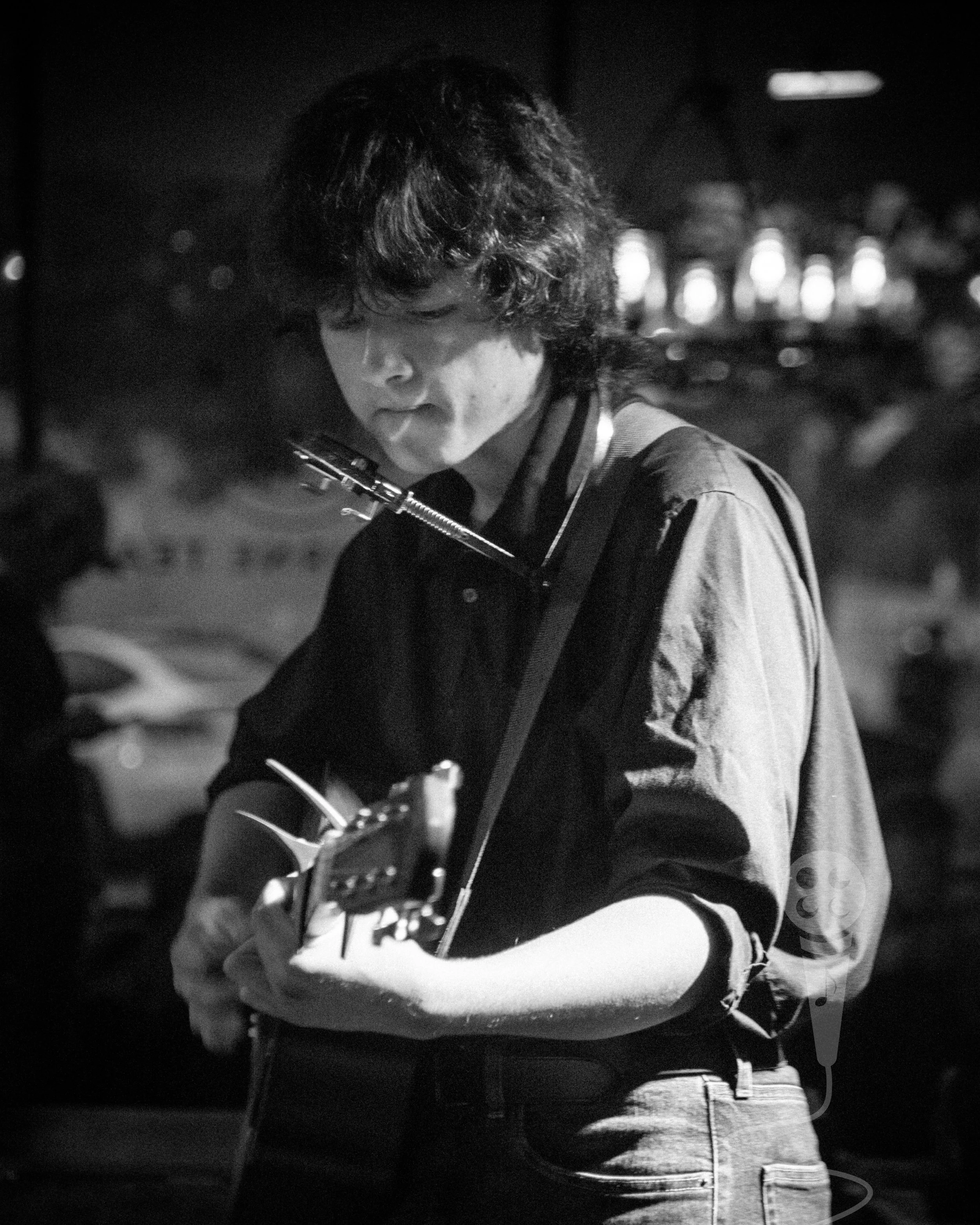
All images featured on this webpage were taken at Nocturne Teas and are from many of our awesome open mic nights.
First come, first served. 15-minute sets. Full bands welcome.
Nocturne’s Open Mic isn’t karaoke and it isn’t a background-noise coffee shop set.
A True Live Sound Experience
We provide:
Full PA and professional live sound engineering
Mic’d drum kit (5-piece with crashes, hi-hat, and ride)
Guitar amp (Marshall Jubilee + Peavey 5150 4x12 cab), Kemper Profiler (rack)
Bass DI (amps welcome, DI preferred)
Up to three vocal mics
Acoustic mic or DI options for guitars and other acoustic instruments
Backing tracks allowed (when prepared and performance-ready)
Every instrument on stage is mic’d and mixed for the room.
Performers are expected to respect the audio engineer. Our philosophy on live sound prioritizes clarity, balance, and audience experience — including proper amp placement and stage volume control.
How It Works
Signups begin at 7:15 PM (in person only)
Performances begin at 8:00 PM
Each performer receives a 15-minute slot
Final performance ends at 1:15 AM
Music is preferred.
Poetry and spoken word are welcome.
Stand-up comedy sets must be approved by management in advance.
Magic acts are welcome (we really like magic)
This is a performance environment.
Sets should be rehearsed and ready to begin promptly.
We ask performers to:
Avoid excessive dead air between songs
Begin and end on time
Be prepared to set up efficiently
Full bands are welcome
Below you’ll find everything you should expect if your band is going to perform at our open mic, or other music event.
Quick Links for Detailed Information on Your Instrument
Guitarists | Bassists | Keys | Vocalists | Drummers | Our Equipment | Our Stage
For the Vocalist:
At Nocturne We use the classic SM58 for vocals, however you are welcome to bring your own microphone if you prefer. Through our board we use equalization , compression, and time-based effects (where tasteful and when necessary) to ensure the audience hears you clearly and consistently.
Equalization (EQ) shapes the tone of your voice by reducing muddiness or harshness and enhancing clarity so your lyrics cut through the mix. Compression controls volume swings, smoothing out loud peaks and bringing up softer moments so your vocal stays present without overpowering the band.
We also use reverb and delay to add depth and space (we use one, both, or neither depending on what your music and voice call for). Reverb gives your voice a natural sense of ambience so it doesn’t sound dry or flat. Delay creates controlled echoes that add fullness and impact. Our mixer includes tap tempo, which allows us to match the delay timing to the song so it stays in rhythm and feels intentional rather than distracting.
Together, these tools create a polished, balanced sound that translates evenly across the entire room.
You can read more about these requirements on our open mic further reading page.
For Guitarists:
Amplifiers:
Will be mic’d
Must be kept at the lowest stage volume necessary
Must be positioned to fire across the stage or toward the back wall, not into the audience
Guitar speakers are highly directional. When pointed into the crowd, the tone changes drastically depending on where someone is standing. One listener may hear harsh, piercing highs, while another hears a dull or muddy sound. That inconsistency makes it impossible to deliver a balanced mix to the entire room.
By mic’ing your amplifier and routing it through the PA, we ensure every audience member hears the same controlled tone. Lower stage volume also prevents your amp from overpowering vocals and drums before they ever reach the sound system.
These requirements are not about limiting your tone — they are about presenting it clearly and professionally to the audience.
You can read more about these requirements on our Open Mic Further Reading page.
For groups of three or more performers, we recommend contacting us a few days in advance so we can plan accordingly. Double slots may be arranged upon request for groups of this size.
For Bassists and Keys Players
The general amplifier rules above apply here as well. However, whenever possible, we will use a DI (Direct Input).
Many bass amplifiers include a DI output, and if available, we will use it. For keyboardists, we prefer to take a mono or stereo line output directly from your instrument. No amplifier is necessary for the audience, though you may use one for personal monitoring if desired.
Low frequencies behave differently than mids and highs. They build up easily on stage, especially near walls and corners. From your position, the bass may feel extremely loud or overpowering. In reality, that is room acoustics at work — not the front-of-house balance.
By running bass and keys through DI, we:
Fully utilize the subwoofers so the audience can feel the low end
Prevent uneven low-frequency buildup in the room
Reduce phase and comb filtering issues caused by multiple sound sources
Maintain precise control of the overall mix
This approach ensures your low end is tight, powerful, and consistent across the entire venue — not just loud near the stage.
You can read more about these requirements on our Open Mic Further Reading page.
For the Drummer:
Our house kit is a five piece Mapex Pro-M birch, with a 14x6.5 Pork Pie “Big Black” brass snare. For cymbals: 16” and 18” Meinl Classics Dark Crashes, 14” Meinl Classics Dark hi-hats, and a selection of three rides: 20” Meinl Classics Dark Ride, 20” Zildjian A Custom Medium Ride, and a 22” Sabian AAX Metal Ride. Our drum throne is the incredibly comfortable classic Rock-n-Soc drum throne.
We mic the kick drum and toms to ensure the audience hears and feels the full impact of the drum kit.
Low-frequency instruments, especially the kick drum, are what give music its physical energy. When routed through the PA and subwoofers, the audience doesn’t just hear the low end — they feel it. Without reinforcement, the kick and toms are often masked by guitars, bass, and keys once the full band is playing.
Mic’ing these drums is not a reflection of the drummer’s ability or tone. It is about delivering a balanced mix to the entire room. As with vocals and amplified instruments, our responsibility is to make sure every audience member hears the performance clearly and consistently.
We typically do not mic the snare or cymbals because they project and cut through the mix naturally. The goal is not to over-amplify the kit, but to reinforce what needs support so the performance translates evenly across the venue.
Ultimately, your performance is for the audience — and our job is to present it at its best.
For the Audio Nerds
(Yes, We See You)
If you care about signal flow, gain staging, and whether we’re actually reinforcing the low end properly — here’s what we’re running.
Front of House:
PreSonus StudioLive 16.4.2 digital mixer
2 × Electro-Voice ZLX-15P-G2 powered tops
2 × Electro-Voice ELX118P 18" powered subwoofers
Floor Monitors:
1x Yamaha DHR12M
1x Mackie THUMP15
AUX outs from our board for additional floor monitors or IEMs.
This gives us full-range coverage with dedicated low-frequency reinforcement so kick, bass, and keys actually move air instead of just making noise. All of this equipment is skillfully operated and maintained by one of our two audio engineers—Corbin and Carissa, both with 10+ years each of experience in recording and live sound.
Drum Mics:
Audix D6 — Kick
Audix D2 — High & Mid Toms
Audix D4 — Floor Tom(s)
We reinforce the low end and body of the kit while allowing snare and cymbals to project naturally.
Guitar & Vocals:
Shure SM57 — Guitar cabinets
Shure SM58 — Vocals
Industry standards for a reason. Predictable, durable, and easy to mix.
Signal Approach:
Guitars are mic’d and blended through the PA
Bass runs DI (post or pre depending on setup)
Keys run mono or stereo DI
Kick and toms reinforced through subs
We use EQ and compression on vocals (and other instruments where necessary) to control dynamics and improve clarity. Reverb and delay are applied tastefully, and our mixer includes tap tempo so delay remains in time with the song.
Low stage volume + centralized control through the PA = consistent sound throughout the room.
If you want to talk signal chain, mic placement, or why phase matters in a 2,000 sq ft room, we’re happy to nerd out with you.
Our Stage
As musicians ourselves, we understand how it feels to have a gig on a mystery stage. You go onto Google, or Instagram to try and find pictures of the stage so you know what you’re getting yourself into, but that requires work, and oftentimes yields less than satisfactory results. So as a courtesy we’ll cut to the chase and give you the photo ourselves, and if you’re curious, our stage measures 12’ x 10’
Please forgive us if our stage isn’t as organized when you visit as it is in this photo. We do use it several times a week for events so there’s always stuff being rearranged.
Before You Book
When you perform at Nocturne, there are no surprises.
You know the stage size (12’ x 10’).
You know the sound system.
You know how we handle stage volume, DI, drum reinforcement, EQ, compression, delay, and reverb.
That transparency matters.
Beyond being a kava bar and café we are a working live music venue in Palm Bay, Florida, and our goal is simple: deliver a consistent, professional live sound experience for both musicians and the audience.
Whether you’re:
A solo acoustic performer
A full band
A heavy, low-end driven act
Or a stripped-down vocal set
Our sound policies exist to ensure clarity, balance, and impact throughout the entire room — not just on stage.
If you’d like to go deeper, you can explore:
Your performance deserves to translate clearly to every listener in the room.
And that’s exactly what we’re here to make happen.
The Vibe
Open Mic at Nocturne ranges from laid-back acoustic sets to high-energy performances.
We are:
Beginner-friendly
Serious-musician supportive
A late-night creative haven
We are not:
A karaoke bar
A novelty act stage
A “half-a-song then quit” environment
If you’re stepping on stage, come prepared to perform.
-
Open Mic is all ages. Guests under 18 must be accompanied by an adult.
-
No advance reservations. Signup is in person only.
If you are bringing a full band (three or more performers), we recommend contacting us a few days ahead so we can plan accordingly. -
Each performer receives a 15-minute slot.
We ask that performers begin and end on time to keep the night running smoothly. -
Music is preferred. Poetry and spoken word are welcome.
Stand-up comedy must be approved by management in advance.
Magic acts are welcome.Open Mic is a performance-focused environment. We ask that sets are rehearsed and performance-ready.
-
No.
While backing tracks are allowed, Open Mic is intended for prepared performances — not casual karaoke-style participation.
-
Yes. We provide:
• Full professional PA system
• Mic’d drum kit (kick and tom reinforcement)
• Guitar amp (Marshall Jubilee + Peavey 5150A cab)
• Bass DI (amp DI preferred)
• Stereo or mono DI for keyboards
• Up to three vocal microphonesYou can learn more about our equipment and setup in our For the Audio Nerds section.
-
Guitar speakers are highly directional. When pointed into the audience at high stage volume, the tone becomes inconsistent across the room.
By mic’ing amplifiers and routing them through the PA, we ensure every audience member hears a balanced mix.
You can read more about this in our Stage Volume & Amplifier Policy. -
Low-frequency instruments rely heavily on the subwoofers. Running bass and keys through DI allows us to:
• Fully utilize the subs
• Reduce phase and comb filtering issues
• Maintain consistent low-end response throughout the venueMore details are available in our Bass & Keys DI Policy.
-
Kick drums and toms are reinforced through the PA so the audience can feel the low-end impact.
Snare and cymbals project naturally and typically do not require reinforcement.Our goal is not to change your tone — it’s to make sure it translates clearly to the entire room.
-
Yes. We use the Shure SM58 as our standard vocal mic, but you’re welcome to bring your own.
We use EQ, compression, reverb, and tempo-matched delay to ensure vocals sit properly in the mix and remain clear and consistent.
-
Open Mic is hosted by Maeve J. and engineered by Carissa L..
For bands, Corbin runs sound.
Performers are expected to follow direction from the sound engineer to ensure the best experience for the audience. -
• Respect the space
• Keep stage changes efficient
• Avoid excessive dead air
• Follow engineer and host direction
• Start and stop on timeOpen Mic has become one of our most active nights. Professional conduct keeps it thriving.
-
Item description
-
Frequently Asked Questions
Looking for an open mic in Palm Bay with full live sound, professional engineering, and a dedicated performance stage? Join us every Thursday at Nocturne Teas.
Visit Us in Palm Bay
Nocturne Teas
Come Perform For Us!
4700 Babcock St NE, Unit 2, Palm Bay, FL 32905 (321) 209-2336
contact@nocturneteas.com
Open from 8:00 AM – 4:00 AM Every Day